How to integrate AI in Schools
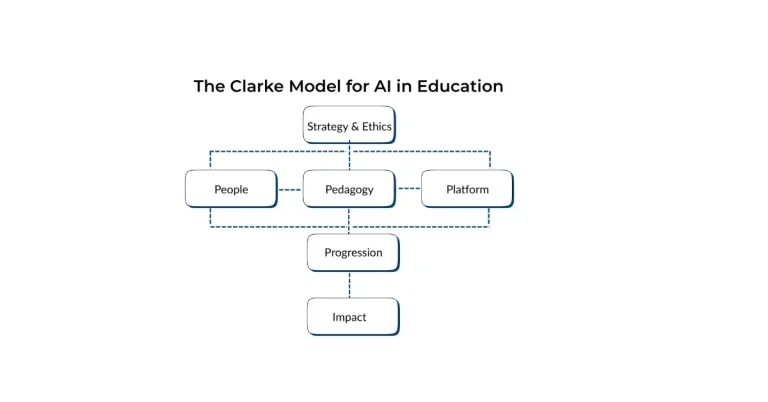
Introducing the Clarke Model for AI in Education
When I think about how to implement Artificial Intelligence (AI) in Education and considerations that need to be given, it can seem overwhelming. So I devised this model to give a broad overview of the main considerations, and to help educators in decision making and practice.
Why Schools Need a Framework for AI
AI adoption in education must be ethical, inclusive, and sustainable, without a guiding structure, there is a risk of rushing into solutions that may not meet safeguarding requirements or align with a school’s vision for learning. My model – The Clarke Model for AI in Education – provides a whole-school approach to implementing AI in education that brings together strategy, people, pedagogy, technology, and impact.
The Clarke Model for AI in Education
The Clarke Model is built on five interconnected pillars. Together, they offer a pathway that schools can use to integrate AI into teaching and learning responsibly.
- Strategy & Ethics
At the foundation of the model is a clear strategy. Schools must set and have a vision for AI that aligns with values and policies. This includes addressing ethical considerations of AI in schools, ensuring transparency, equity, and safeguarding.
- People
This is where the biggest impact is – upon people! AI adoption is not just about technology. Teachers need ongoing training, pupils must become AI-literate citizens, and parents should be kept informed. School leaders and governors also play a vital role in setting direction and accountability.
- Pedagogy
The true value of AI lies in how it supports teaching and learning. This pillar is where you look at ways to use AI such as for personalised learning, formative assessment, and student engagement. The focus is on AI to enhance classroom pedagogy rather than replace human teaching.
- Platform
Technology choices matter, all schools need robust systems, vetted tools, and safe infrastructure. Selecting the right platforms involves balancing innovation with safeguarding, security, and data privacy. This ensures that schools adopt safe and effective AI tools for education.
- Progression & Impact
Finally, schools must measure whether AI is making a real difference. The model encourages leaders to monitor outcomes, evaluate staff and pupil experiences, and share success stories. This evidence-led approach helps schools demonstrate positive impacts of AI in teaching and learning.
Using the Clarke Model in practice
I like to be as practical as possible, here are a few ways in which you can utilise this model:
- Use it alongside an in-depth AI audit tool to assess current practice, in your setting
- Apply it in staff training to support professional development.
- Refer to it when drafting digital strategy or safeguarding policies.
- Share it with parents to build confidence and transparency.
By using this model, schools can move beyond one-off experiments with AI and instead build a thoughtful, strategic approach that benefits the whole school community.
A Call to Action
I hope this helps to offer a clear way forward for schools that want to embrace technology with confidence. If your school, trust, or organisation is looking for support in this area, I can help. I work with educators and leaders to design strategies, deliver professional learning, and build curricula that integrate AI effectively.
Explore my other AI related work
- Periodic table of AI in Education
- Blogs on embedding cross curricular AI
- Resources to teach AI