AI and Robotics - The Brain and the Shell Working Together
Artificial intelligence and robotics are often spoken about as if they are separate fields, yet in reality they are deeply intertwined. Think of it like this, AI as the brain and robotics as the shell that brings thinking to life.
One without the other is powerful, but together they open possibilities that are already shaping how we learn, work and live.
Over the years my work in education and technology has taken me to many interesting places, but few are as revealing as a walk through a smart city.
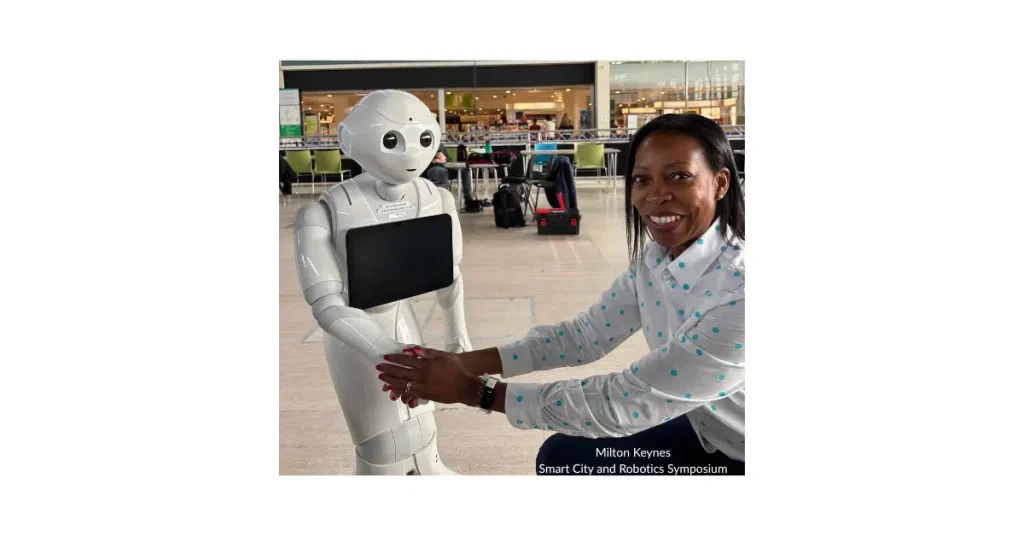
Milton Keynes, for example, is one of the UK’s most developed smart city testbeds. It is a place where robots glide along pavements delivering groceries, sensors embedded in roads adjust traffic flow, and data-driven decision making keeps the city moving efficiently.
These robots may look simple on the surface, but behind each smooth journey lies an ecosystem of AI systems that analyse location, plan safe pathways, and interact with the environment.
Real life robots in action
Milton Keynes is known for its small autonomous delivery robots that travel along footpaths. People often stop to photograph them, but beyond the novelty they highlight something important. These robots do not operate on guesswork. They rely on computer vision to identify obstacles, mapping algorithms to understand routes, and machine learning to improve performance over time. The AI brain constantly processes what the sensors pick up, making decisions in real time.
Around the world similar examples can be found – in Japan, robotic assistants support elder care by helping people stand, walk or carry items. In Dubai, security robots patrol shopping centres. In Singapore, cleaning robots help maintain public spaces, particularly during late hours when human staff are reduced. On farms, robotic arms plant seeds with precision and autonomous tractors navigate fields with the help of satellite data. These examples show that robotics is no longer futuristic. It is here, embedded in daily life.
Robotics as an integrated learning opportunity
One misconception I often encounter is that robotics sits on its own as a specialist topic. In reality robotics connects beautifully with core subject areas. Bringing robots into lessons is not about teaching children to become roboticists. Instead it is about helping them see links between subjects and understand how ideas come together to solve real problems.
- Maths
Robotics uses measurement, geometry, angles, and algebra. A simple classroom robot that needs to turn ninety degrees or move forward twenty centimetres gives pupils a tangible reason to understand numbers. - Science
Robotics aligns with physics through study of forces, energy, circuits and materials. Concepts such as friction or conductivity come alive when learners test how a robot moves on different surfaces or how sensors respond to changes in light. - Computing
AI, programming, algorithms, and data all underpin modern robotics. Coding a robot to navigate a maze or respond to instructions gives learners a direct connection to how automation works. - Design and Technology
This subject brings creativity to the forefront. Learners design robot housings, explore mechanisms, and evaluate products. They see engineering as a hands-on, problem solving discipline. - English
Often overlooked, but robotics links to storytelling, explanation, and ethical discussion. Pupils write instructions, create narratives about future worlds, debate safety or equality, and build vocabulary around emerging technology.
These connections matter because they help children understand that robotics is not isolated. It is an integrated part of modern society and a powerful lens through which to explore learning.
A world where robots and people work together
As robots continue to evolve, so too will the role they play alongside us. Rather than replacing humans, many are designed to take on repetitive or hazardous tasks, freeing people to focus on roles that require empathy, creativity or judgement.
For example, hospital robots transport medication so nurses can dedicate more time to patient care. Construction robots handle heavy lifting, reducing injury risk to workers.
In classrooms, robots can act as learning companions, helping children practise reading or languages.
We are moving towards a world where robots are trusted partners. Understanding them now helps ensure that future generations can use, question and shape these technologies rather than be shaped by them.
Final thoughts
AI and robotics are transforming our environments, from the pedestrian pathways of Milton Keynes to the most advanced smart cities across the globe. When we understand AI as the brain and robotics as the shell, we see how the two complement each other. More importantly, we begin to recognise that robotics is not limited to science labs. It is woven into daily life and offers rich opportunities for teaching and learning across the curriculum.
Hi, I am Beverly Clarke MBE, here are some examples of my AI work:
- Chaired the Smart City and Robotics Symposium in Milton Keynes 2025 – https://youtu.be/WcrfCg_bwYw
- Author of The Digital Adventures of Ava and Chip children’s book series
- Member of the UK Government Digital, AI and Technology Task and Finish Group
- Resource writer for K–12 AI curricula
- Speaker on AI in education at conferences
- Given evidence at the All Party Parliamentary group on Artificial Intelligence
- Guest writer for ITN Business
I work at the intersection of industry and education, helping organisations and educators make sense of emerging technologies.
Have you enjoyed this blog, please consider sharing it with a colleague
If you are looking for a knowledgeable panellist, guest writer or speaker to bring fresh insights on AI, digital literacy and cross-curricular education, I would love to hear from you.
Browse this website to explore my portfolio career and get in touch to discuss how we can work together.